Handout for How to Draw Hats in Art Education
Art Education and the Coronavirus (COVID-nineteen)
Every bit teachers, nosotros wear many hats. Nosotros are educators, only nosotros also human action equally parents, nurses, counselors, entertainers, and more when it comes to teaching and connecting with our artists. We went to school, got high-level degrees in fine art educational activity, had in-depth conversations about child psychology, and are passionate virtually how we treat our kids equally artists.
Equally we all piece of work through the reality of the COVID-19 pandemic, parents and guardians find themselves needing to take on the role of teachers. Though they may not have gone to higher to exist art teachers, it is nonetheless important to teach parents and guardians how to talk to kids about their art.
The most of import affair to recollect when sharing information with parents and guardians at this time is to keep information technology elementary. People are trying to balance this new normal of living and it can be overwhelming. Avoid adding unnecessary stressors. However, giving parents and guardians enrichment data about how to encourage inventiveness and chat with their kids can be a helpful and powerful tool.
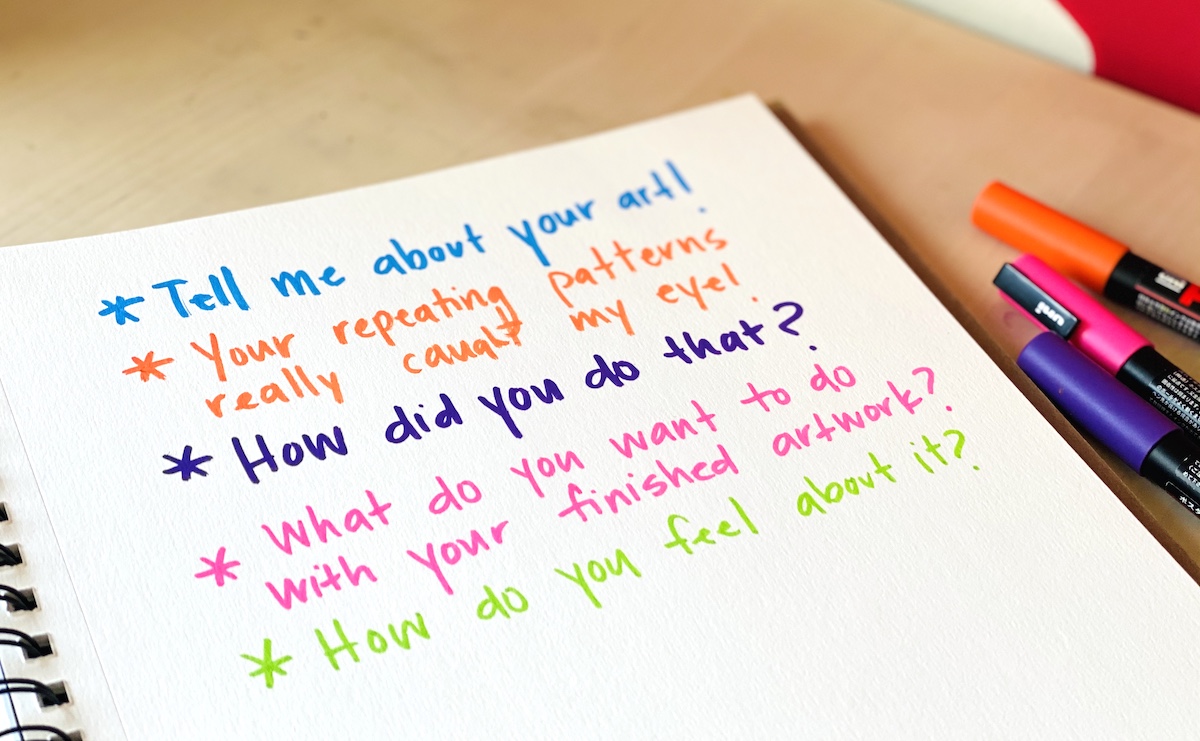
When talking to kids near their art, focus on these half dozen things:
one. Let them use their own words.
Instead of saying, "What is it?" try, "Tell me near your artwork!"
When a kid brings their creation up to you with a smile, it's of import to let them talk about their work in their own words. A scribble or a paper sculpture doesn't need to "exist" anything. Reframing the question from "What is it?" to "Tell me about your artwork" allows the child to use their own words to describe what they fabricated. Maybe the kid created a piece of art inspired by a feeling, an imaginary globe, or simply had fun playing with art materials. No matter what they fabricated, the all-time way to encourage their inventiveness and imagination is to allow them the chance to describe their work in their own words.
2. Be specific with your comments.
Instead of saying, "Information technology's then neat!" attempt, "Your repeating lines actually grab my heart!"
Using specific comments shows kids you are genuinely looking at their work. Using a traditional adjective such as "absurd," "crawly," or "great," to describe artwork is all well and adept simply can get out a immature artist wanting more. Try picking one or 2 specific focus areas virtually the artwork and make a direct comment relating to those areas. Kids seek positive affidavit simply as much as the rest of us. Beingness specific with your comments allows kids to feel affirmed in their creativity.
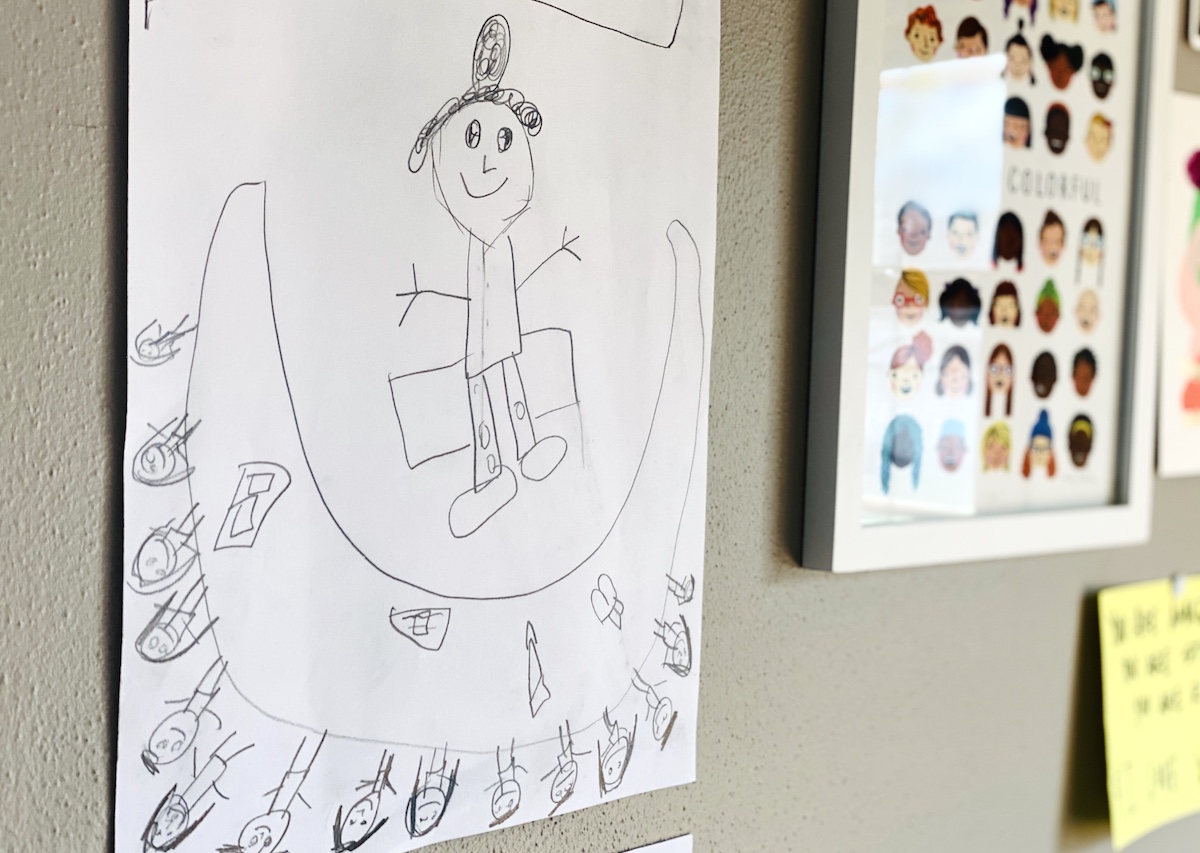
iii. Ask interesting questions.
Instead of saying, "That'due south a cool surface area!" endeavor, "How did y'all do that?"
Asking interesting questions is one of the nuts of swell conversation. Encouraging kids to aggrandize on their creative process and explain how they did something is a great way to practice discussion skills. The ability to talk about how the artwork was created and the processes that went into making it is a skill artists all over the earth use. Teaching your kids to respond and reflect on their artmaking procedure volition inevitably brand them better artists and critical thinkers.
iv. Let them choose the display.
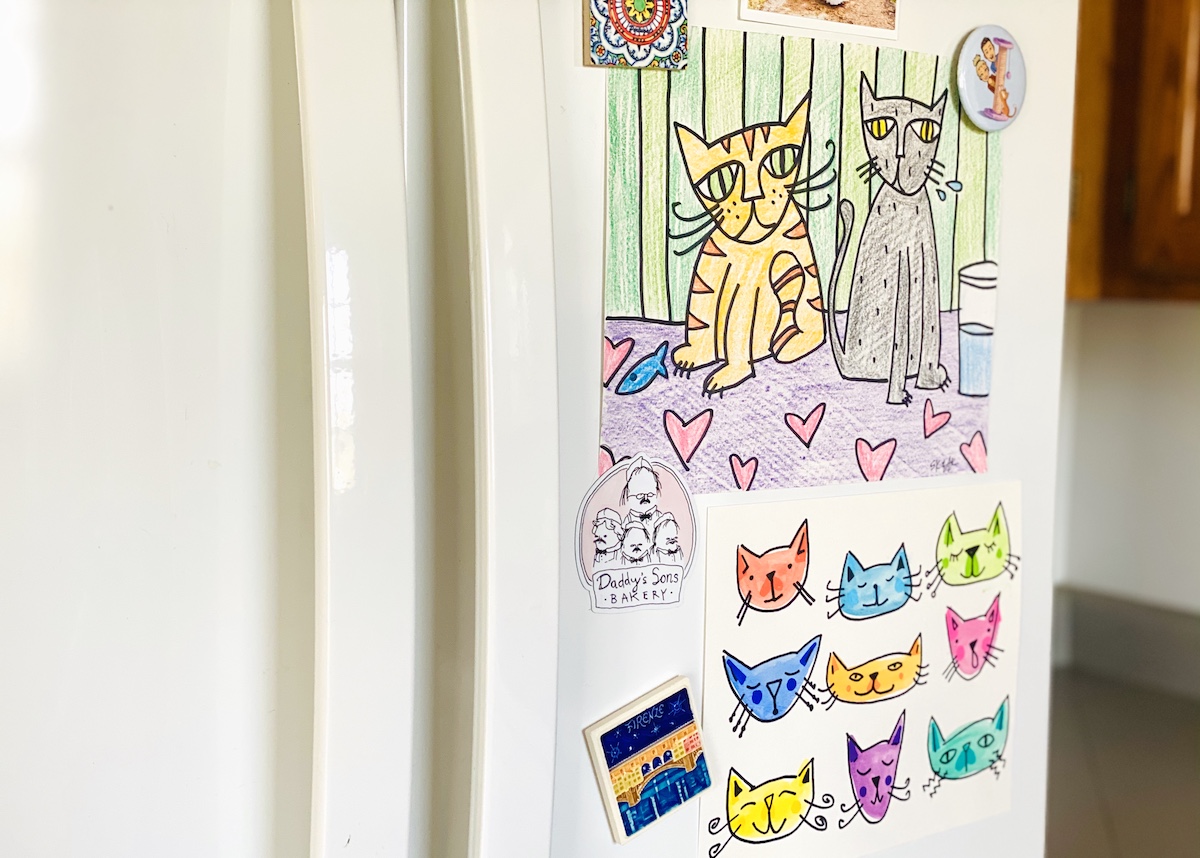
Instead of saying, "Put information technology on the fridge!" try, "What would you like to practice with your art?"
Inventiveness is not over once the artwork is complete. What kids determine to practice with their completed artwork is likewise a manner to stretch their imagination. Perhaps the child wants to create a gallery display wall. Maybe the child wants to ship the artwork in the postal service to a loved i. Maybe the kid wants to fold it upwardly and plow information technology into a newspaper airplane. Giving kids the ability to command the brandish of their artwork can provide a tremendous sense of buying and pride.
five. Requite them time to identify their feelings first.
Instead of proverb, "I love it!" try, "Are y'all a proud creative person?"
Let'south confront it, validation feels great, and we all want information technology. Simply sometimes, we demand to practice valuing our own feelings, likewise. Of course, yous should give positive feedback to kids. Even so, y'all can also effort letting kids identify their own feelings showtime by request questions like "How exercise you feel nearly it?" or "Are yous proud of your artwork?" Encouraging kids to remember about how they feel will requite you a deeper insight into their thought process. It will also build cocky-confidence in their ain artwork instead of relying solely on the affirmation of others.
Need more information? Learn more here!
half-dozen. Apply the Elements and Principles as a catalyst.
Ask, "Can you place which Elements of Art and the Principles of Design you used in your cosmos?"
The Elements of Fine art (Line, Shape, Color, Value, Texture, Space, Course) and the Principles of Art (Rest, Contrast, Emphasis, Pattern, Unity, Motion, Rhythm) are always used in creating art. Fifty-fifty if kids are not specifically intentional when choosing colors or creating a sense of emphasis, information technology is still a part of artmaking. Engaging in conversations about what elements and principles kids can spot in their artwork is a fun fashion to accept a meaningful art conversation.
To help, download this helpful guide.

Download At present!
For more fine art conversations at home, read How to Get Your Students to Talk Near Art at Home.
No matter how you get almost it, talking to your kids about their art is of import. Edifice connections through artmaking is natural. Connecting with your kids and talking to them about their creativity is the perfect mode to bear witness you intendance. You'll honey hearing what your artists share with you nearly their creations.
What kinds of questions practise y'all recollect are best to ask kids?
Why is it important to extend the chat nearly art?
How else can y'all encourage creative discussions with your kids?
Magazine articles and podcasts are opinions of professional instruction contributors and do not necessarily represent the position of the Art of Didactics Academy (AOEU) or its bookish offerings. Contributors employ terms in the way they are most often talked about in the telescopic of their educational experiences.
Source: https://theartofeducation.edu/2020/04/20/how-to-talk-to-kids-about-their-art/

Post a Comment for "Handout for How to Draw Hats in Art Education"